Water filters: The ones we'd recommend for reduced PFAS, microplastics and limescale and better tasting water
A good water filter can reduce chlorine and limescale in our drinking water and, depending on the technology, reduce specific substances including lead, selected PFAS and microplastic particles.
Our Top Picks
Phox Wave
Strong independent UK reviews, low running costs and a reusable cartridge.
BRITA Glass and MAXTRA PRO
A glass jug filter. Widely available replacement cartridges
AquaTru Classic
It has strong third-party testing and is particularly interesting for PFAS and broad contaminant reduction.
On this page
- So why are so many people filtering tap water if it's safe to drink?
- Microplastics
- PFAS
- Lead
- Chlorine
- Making sense of water filter options
- Water filters explained: From water jugs to whole-house filtrations
- Filter jugs
- Glass filter jugs
- Countertop filters
- Faucet (tap mounted) filters
- Under-sink filters
- Reverse-osmosis systems
- KindCasa top tips when buying a water filter
- Best water filters for every home and budget
Water filters have become a huge business.
Retailers now sell everything from £20 filter jugs to £400 reverse-osmosis systems. At the same time, we're regularly told that UK tap water is already safe to drink.
So why are so many people filtering tap water if it's safe to drink?
Part of the answer is simple: Safe drinking water and completely contaminant-free water are not the same thing.
UK drinking water is very tightly regulated and safe to drink. Most households do not need a filter to make their tap water safe.
But regulation is based on substances remaining below permitted limits, not on every trace being removed. Water can also pick up contaminants from older domestic plumbing, while hard water can leave significant limescale even though it remains safe to drink.
There is another shift too. Many families are trying to buy less bottled water because of its storage in plastic bottles. At the same time, awareness of PFAS, microplastics and lead has grown.
A good filter can improve taste, reduce chlorine and limescale and, depending on the technology, reduce substances including lead, selected PFAS and microplastic particles.
Although UK tap water is considered safe to drink, many people choose to filter it to improve taste, reduce limescale or lower their exposure to certain substances that can be found in drinking water, including PFAS, microplastics and, in some older homes, lead.
Microplastics
Have been found throughout the environment, including in drinking water. What remains less certain is exactly what normal exposure means for human health. Filters with very fine physical membranes can significantly reduce microplastic particles.
PFAS
PFAS, often called forever chemicals, are a large group of synthetic chemicals used in products including non-stick cookware, stain-resistant fabrics and firefighting foams. They break down extremely slowly and are now widely present in the environment. Some PFAS have been linked to potential health concerns, which is why scientists and regulators are paying increasing attention to reducing unnecessary exposure wherever practical.
Lead
Lead is more likely to enter drinking water from older plumbing than from the water treatment system itself. Some filters can substantially reduce lead, particularly those combining activated carbon with ion exchange.
If you suspect lead pipework, a filter should not replace investigating the plumbing itself.
Chlorine
Chlorine helps keep drinking water microbiologically safe as it travels through the network. Even relatively inexpensive activated-carbon filters can make a noticeable difference for people who dislike the smell or flavour of chlorinated water.
Making sense of water filter options
Choosing a water filter shouldn't feel like studying chemistry. With so many technologies, claims and certifications it's easy to lose sight of what actually matters.
Water filters explained: From water jugs to whole-house filtrations
From filter jugs to whole-house systems, water filtration can seem confusing. The key is understanding that different filters remove different contaminants.
Filter jugs
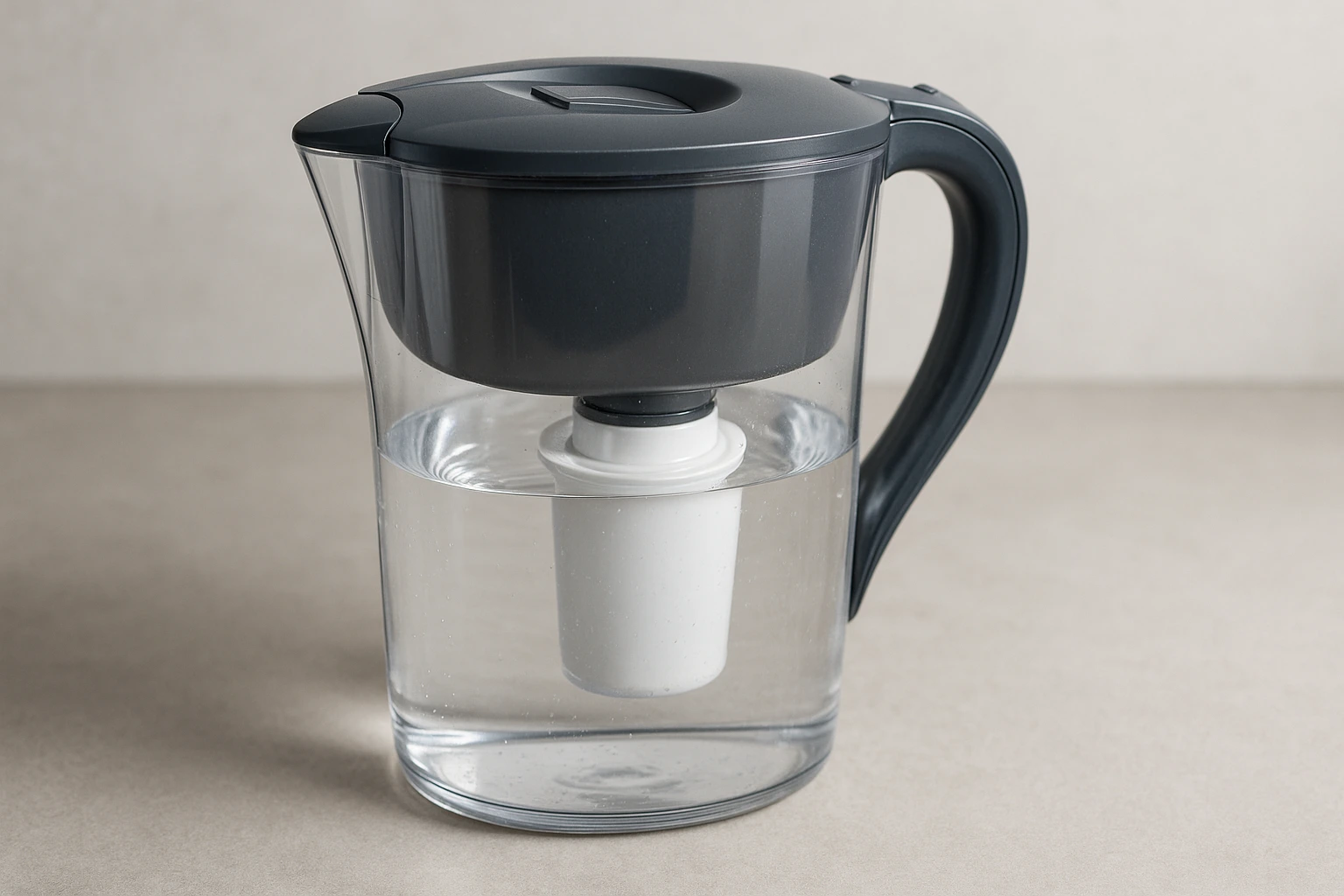
Most use activated carbon and ion-exchange resin.
Pros
- Affordable
- No installation
- Good for taste and chlorine
- Some reduce lead and limescale.
Cons
- Filtration can be slow.
- Cartidges need frequent replacement
- Many jugs are plastic, so filtered water sits against plastic until used.
Glass filter jugs
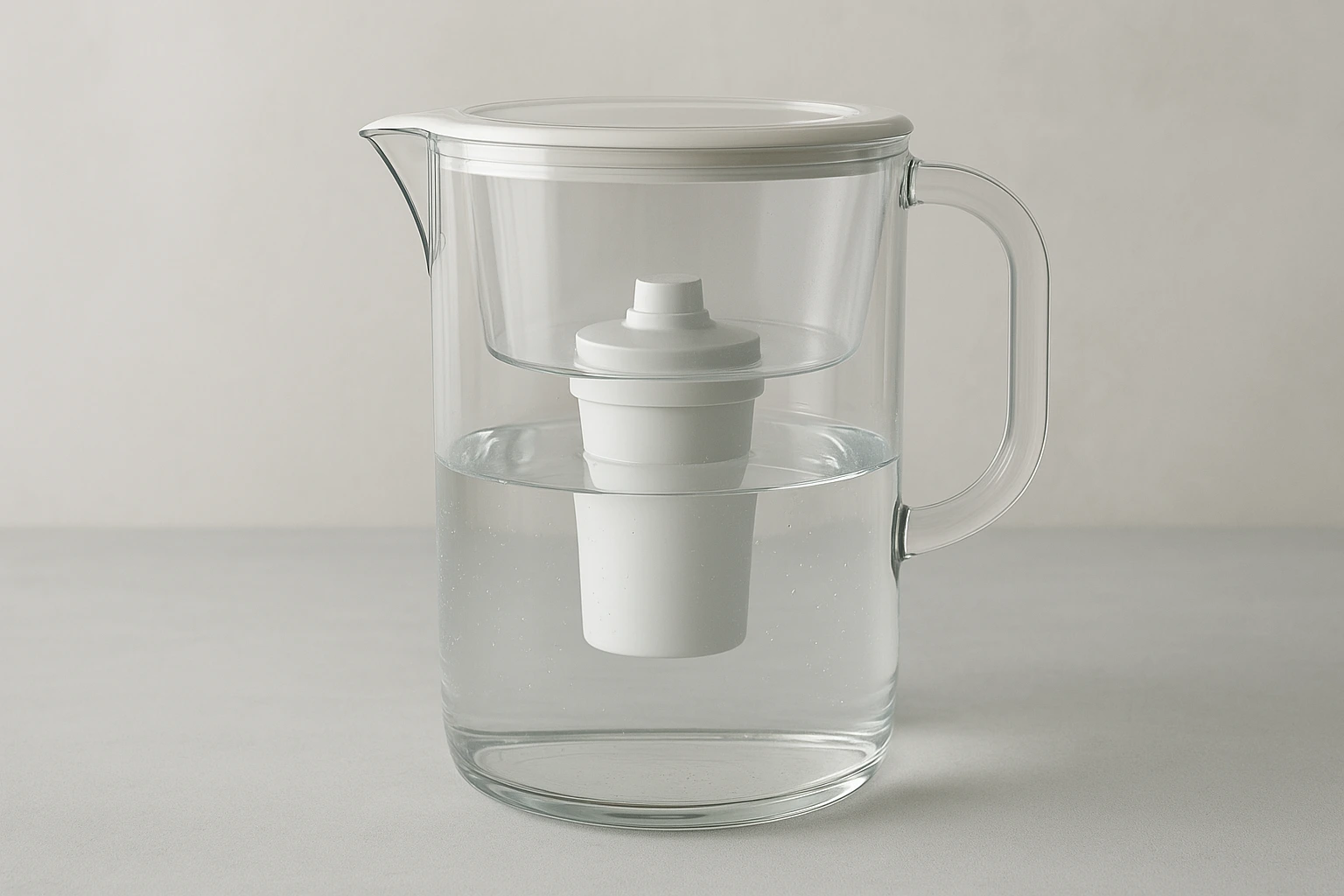
These work like conventional jugs but use glass for the main container.
Pros
- Less plastic contact.
- Glass does not hold tastes or odours.
- Often easier to clean.
Cons
- Heavier
- Breakable
- Note - lids and cartridges may still contain plastic
Countertop filters
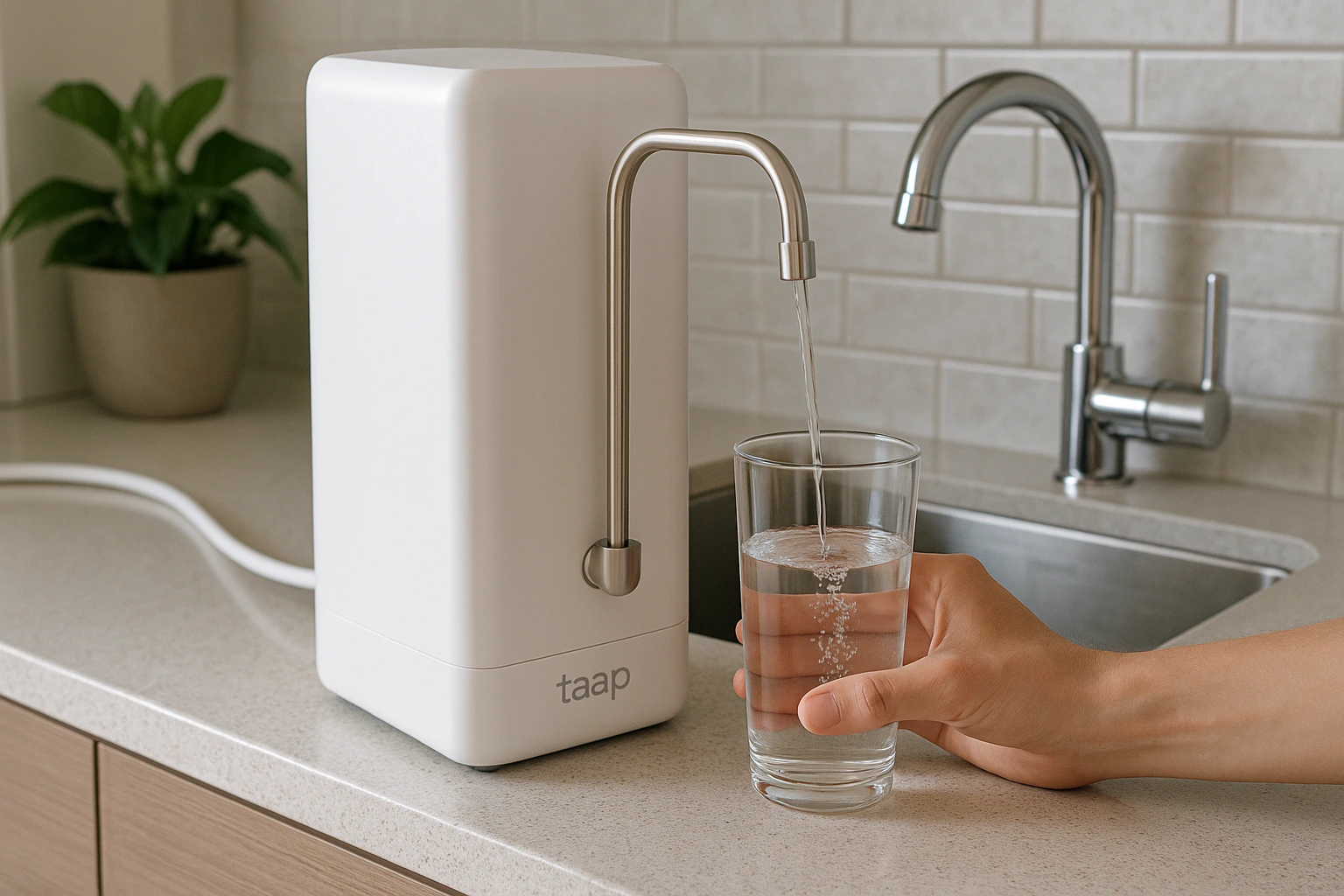
Countertop water filters sit on your kitchen worktop and don't usually require permanent plumbing. Some simply connect to your tap, while others, such as many reverse-osmosis systems, have their own built-in water reservoir and dispense filtered water directly.
Pros
- Usually provide much more thorough filtration than a standard jug.
- Many can reduce lead, PFAS, chlorine, heavy metals and microplastics.
- No permanent plumbing required for most models.
- Large water capacity, making them suitable for families.
- Longer-lasting filters than many jug systems.
Cons
- More expensive than filter jugs.
- Take up valuable worktop space.
- Some systems, particularly reverse osmosis, produce wastewater.
- Replacement filters can be costly.
Faucet (tap mounted) filters
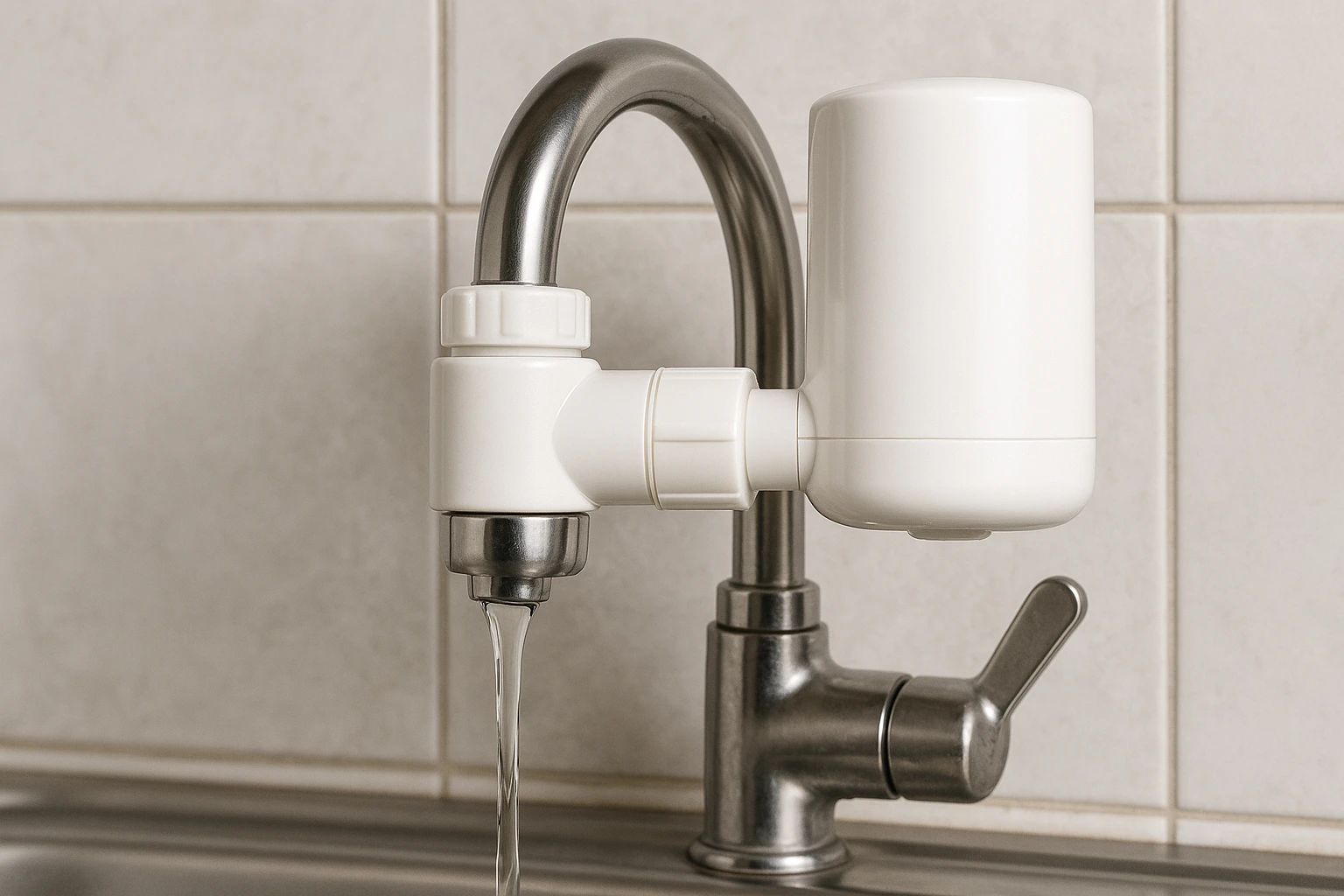
Faucet filters attach directly to your kitchen tap and filter water as it flows through. Most use activated carbon, sometimes combined with other filtration media, and many have a switch that lets you choose between filtered and unfiltered water.
They're a good option if you want filtered water on demand without keeping a jug in the fridge.
Pros
- Affordable and easy to install
- Convenient filtered water straight from the tap
- Can reduce chlorine, unpleasant tastes and odours, and some models target contaminants such as lead
- Usually cheaper than under-sink systems
Cons
- Filtration is generally less comprehensive than good under-sink or reverse-osmosis systems
- Exactly what they remove varies considerably between models
- Replacement cartridges add an ongoing cost
- Can slow the water flow
Under-sink filters
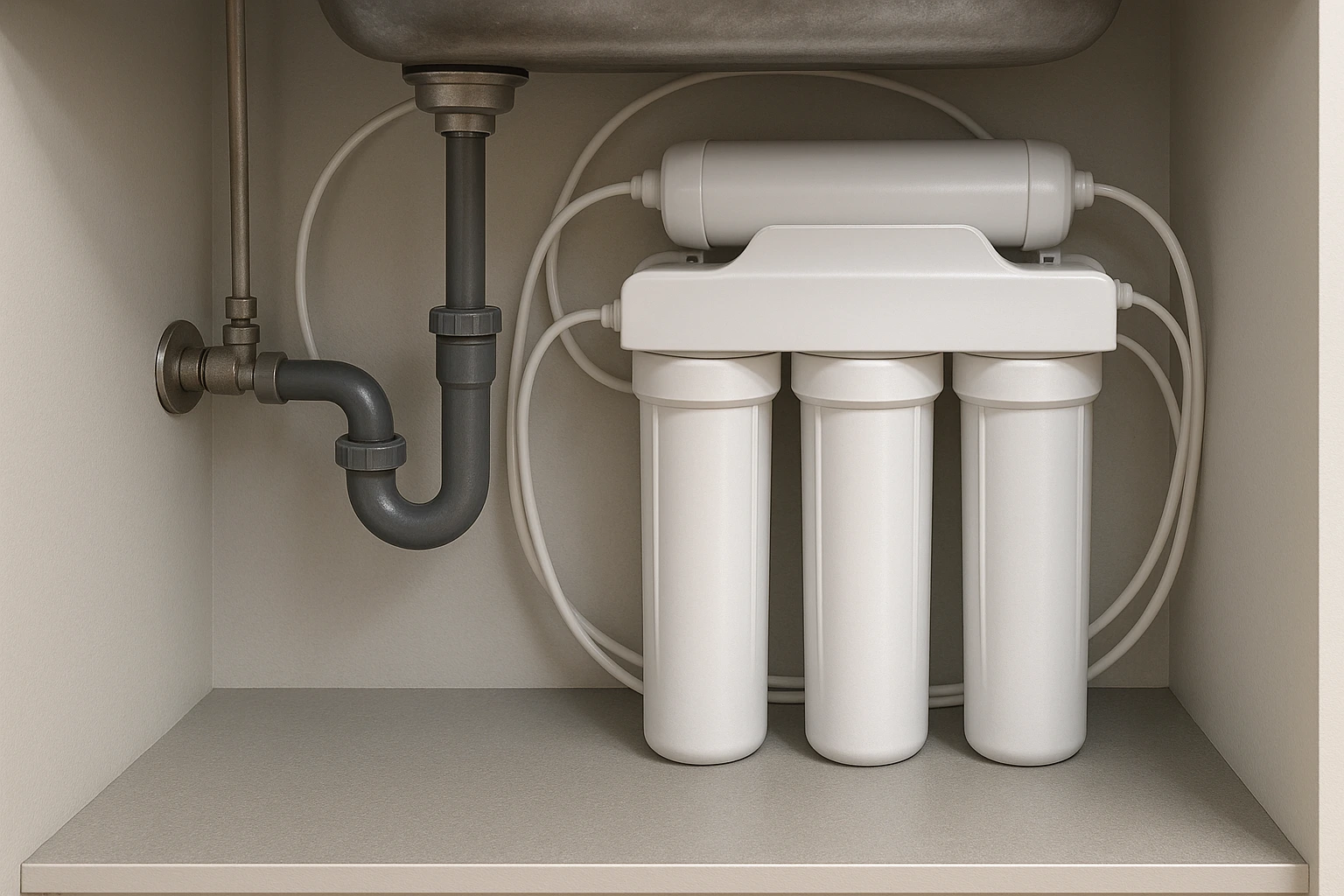
These connect to the water supply beneath your kitchen sink.
Pros
- No jug to fill
- Filtered water on demand
- Convenient for families
- Longer cartridge life
Cons
- Higher upfront cost
- Sometimes needs installation
- Replacement cartridges can be expensive.
Reverse-osmosis systems
Reverse osmosis (RO) filters use a fine membrane and multiple filtration stages to remove a much wider range of contaminants than standard carbon filters. They’re available as under-sink systems or countertop units, making RO an option even if you don’t want permanent plumbing changes.
Pros
- Very strong contaminant reduction.
- Effective against many PFAS.
- Removes many dissolved substances.
Cons
- Removes minerals too (if this is a concern look out for the ones that put the minerals back in - see recommendation below)
- Takes up space
- Produces wastewater
- Expensive
KindCasa top tips when buying a water filter
1. Decide what you want to reduce.
Chlorine, limescale, lead, PFAS and microplastics require different filtration approaches.
2. Ignore impressive-sounding contaminant numbers without evidence.
“Removes 100 contaminants” means little without independent testing.
3. Consider different filtration methods
Most water filters use activated carbon to reduce chlorine, improve taste and remove some unwanted compounds. Many also include ion-exchange resin to help reduce limescale and certain metals. Multi-stage filters combine several technologies for broader filtration, while reverse-osmosis systems provide the most comprehensive treatment, removing a much wider range of contaminants. The trade-off is higher cost, slower filtration and wastewater production.
4. Check running costs.
A cheap jug with expensive cartridges can quickly become costly.
5. Change filters on time.
Old filters become less effective and poorly maintained systems can collect organic material.
6. Think about the jug material too.
If reducing plastic contact matters to you, consider glass or stainless steel.
7. Be wary of alarmist marketing.
Good filtration evidence should stand on its own.
Best water filters for every home and budget
Best Budget (£)
Phox Wave
Refillable cartridge, excellent independent reviews and designed to improve taste while reducing chlorine, lead, copper and limescale. The filtration media is tested to the European EN17093 standard.
- Refillable cartridge reduces waste.
- Excellent taste improvement.
- Good running costs.
- Plastic jug.
- Not designed for maximum PFAS removal.
- Doesn't physically filter very small particles
Where to buy
Best Mid-range (££)
BRITA Glass + MAXTRA PRO
A borosilicate glass jug paired with BRITA's latest MAXTRA PRO filter. Widely available replacement cartridges. Filters chlorine, lead, copper, selected PFAS (PFOA/PFOS), herbicides & pesticides (selected), limescale
- Glass body
- Replacement filters everywhere.
- Good balance of filtration and convenience.
- Internal components still contain plastic.
- Monthly cartridge replacement.
Where to buy
Waterdrop Glass Pitcher
A stylish borosilicate glass jug with NSF-certified filter claims and very good limescale reduction. Filters chlorine, lead, limescale, taste and odour
- Glass body
- Fast filtration
- Good value
- Smaller capacity
- Some plastic inside
Where to buy
Aarke Purifier
Probably the nicest-looking filter available. Glass, stainless steel and refillable filter granules. Filters chorine, lead, copper and limescale
- Beautiful construction
- Glass and stainless steel
- Refillable media
- Expensive
- Heavy
- Doesn't target as many contaminants as membrane or RO systems
Where to buy
TAPP EcoPro
One of the few faucet systems claiming reduction of PFAS and microplastics alongside chlorine. Biodegradable cartridges are another advantage. Filters chlorine, PFAS, microplastics, heavy metals, pesticides
- Excellent convenience
- Better filtration than most tap filters.
- Biodegradable cartridges.
- Easy installation
- Not compatible with every tap
- Less powerful than under-sink systems
Water2 Pod 2.0
The best under-sink option from our research for most households. Filters chlorine, microplastics, bacteria, parasites, sediment and selected PFAS (depending on cartridge)
- No jug
- One-year filter
- Easy installation
- Filtered water from your normal tap
- Installation required
- Cartridges around £100/year
- Claims depend on cartridge used
AquaTru Carafe
A compact countertop reverse-osmosis system requiring no plumbing. Strong contaminant reduction in a more portable format. Filters PFAS, lead, heavy metals, chlorine, microplastics, pharmaceuticals, nitrates, many dissolved contaminants
- No installations
- Reverse osmosis
- Excellent contamination reduction
- Smaller than most countertop systems
- Expensive
- Slower than other options
- Produces wastewater
Best Premium (£££)
Aquasana 3-Stage Max Flow Claryum
NSF-certified for multiple contaminant standards and one of the strongest non-reverse osmosis systems available. Filters chlorine, lead, PFAS, VOCs, Cysts, sediment
- Excellent filtration
- No wastewater
- Good flow rate
- Installation required
- Takes cupboard space
- More expensive filters
Where to buy
Premium — AquaTru Classic
Our premium recommendation. Reverse osmosis with extensive third-party testing and one of the broadest filtration profiles available. Filters PFAS, lead, heavy metals, chlorine, fluoride, microplastics, pharmaceuticals, nitrates, VOCs, many dissolved contaminants
- Outstanding filtration
- No plumbing required
- Ideal for high-level contaminant reduction
- Expensive
- Bulky
- Produces wastewater
- Removes minerals
Aquasana SmartFlow® Reverse Osmosis
One of the strongest under-sink reverse osmosis systems available, combining RO with activated carbon and remineralisation. Unlike many basic RO units, it adds beneficial minerals back into the water after filtration.Filters out PFAS (including PFOA & PFOS), lead, arsenic, chromium, fluoride, chlorine, VOCs, pharmaceuticals (selected), heavy metals, microplastics, sediment
- Extremely broad contaminant reduction
- Reverse osmosis plus remineralisation.
- Filtered water on demand.
- Doesn't take up worktop space.
- Excellent long-term filtration.
- Expensive.
- Professional installation recommended.
- Requires under-sink space.
- Produces wastewater, like all RO systems.
- Higher ongoing filter costs than standard systems.
Aquasana AQ-5300+ Claryum 3-Stage Max Flow
A high-performance three-stage under-sink filter recommended by Good Housekeeping. Designed to reduce a broad range of contaminants, including PFAS, lead and chlorine, while retaining beneficial minerals.
- Broad contaminant reduction, including PFAS
- Fast on-demand filtered water
- Retains beneficial minerals
- Available from a UK/European supplier
- More expensive than simpler under-sink filters
- Takes up cupboard space
- Requires installation
- Replacement filters add to running costs
Ad — Contains affiliate links. We may earn a commission if you buy through our links, at no extra cost to you. As an Amazon Associate I earn from qualifying purchases.