Forever chemicals in your pans? Here's what we recommend instead.
Worried about PFAS or forever chemicals? Discover which pan materials reduce chemical uncertainty and what cookware KindCasa recommends for healthier everyday cooking.
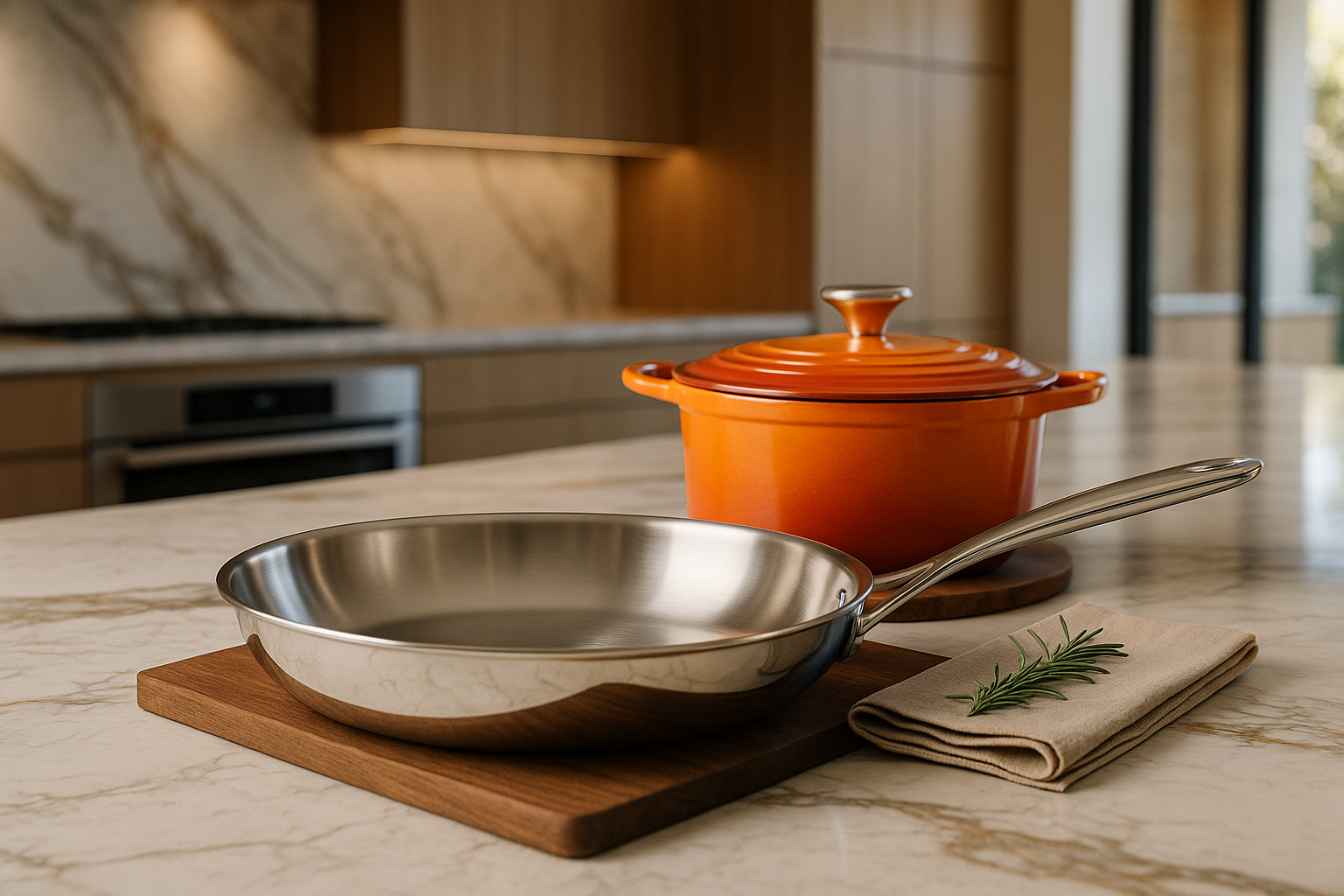
Our Top Picks
ProCook Stainless Steel Frying Pan
Reputable good quality stainless steel frying pan
Le Creuset Cast Iron Pieces
Premium enameled cast iron with strong long-life appeal
On this page
- Why people are suddenly talking about "forever chemicals"?
- Why does this matter?
- What about Teflon?
- What is the safest material for cookware?
- What about ceramic-coated cookware?
- When buying a pan consider:
- Are stainless steel pans safer?
- Is ceramic cookware non-toxic?
- Is cast iron better than stainless steel?
- Our Favourite Safer Pans
Research has linked some PFAS with important health concerns, including effects on the immune system, cholesterol, hormones and certain cancers. The World Health Organization's IARC now classifies PFOA—one of the best-studied PFAS—as carcinogenic to humans.
Why people are suddenly talking about "forever chemicals"?
Over the last few years you've probably heard the terms PFAS or "forever chemicals". PFAS (per- and polyfluoroalkyl substances) are a very large family of man-made chemicals that have been used for decades because they resist: heat, grease, oil and water. They've been used in thousands of products including waterproof clothing, food packaging, stain-resistant fabrics and some non-stick cookware.
Manufacturers of non-stick coatings maintain that their products are perfectly safe when used as directed. Yet many of the same companies continue to advertise their cookware as "PFOA-free" — raising the obvious question: if PFOA was never a concern, why make it such a prominent selling point?
Why does this matter?
In 2026, the UK Government published its first national PFAS Action Plan, recognising forever chemicals as an important long-term environmental and public health challenge. Scientists don't yet know everything about long-term exposure, consumers have to make practical decisions using the best evidence available today.
We do not fully know the long-term health impact of every cookware coating or chemical used across modern products. PFAS are persistent chemicals that can remain in the environment and the body for a long time. If your non-stick pan is scratched, chipped or peeling, it's a good time to replace it. A damaged coating can flake into food.
Choosing simpler, well-understood materials such as stainless steel, cast iron, carbon steel and enamelled cast iron can reduce uncertainty, especially when compared with worn or conventional PTFE non-stick pans.
What about Teflon?
Teflon is a PFTE non-stick coating. Although modern Teflon pans are PFOA free, they still rely on a synthetic coating.
What is the safest material for cookware?
When it comes to cookware, simpler is often safer. These are the materials we'd choose for our own kitchens:
- Stainless steel
- Cast iron
- Carbon steel
- Enamelled cast iron
Stop guessing what's "safe": Choose cookware that reduces chemical uncertainty today.
*Cookware coatings don't last forever. Heat, metal utensils, scrubbing and repeated washing gradually wear them down. As coatings age, they may lose their non-stick performance, scratch, peel or flake.
If a coated pan is badly scratched or peeling relacing is a sensible choice. Stainless steel, cast iron and carbon steel don't rely on synthetic non-stick coatings, making them durable long-term alternatives.
Many newer "PFAS Free" and ceramic coatings haven't been used long enough to fully understand how they perform over decades of everyday use. While they can be good options (and we've included a few in our recommendations) long term durability and testing data is still limited compared with traditional materials.
Stainless Steel: Food can stick if you cook on the wrong temperature. Most people simply need a few meals to learn how to preheat the pan properly. Once you've got the hang of it, stainless steel becomes surprisingly easy to cook with.
What about ceramic-coated cookware?
Ceramic-coated cookware is one of the fastest-growing parts of the cookware market.
It's often advertised as:
- non-toxic
- healthy
- green
- PFAS-free
Some ceramic-coated pans may indeed be a reasonable choice. Ceramic-coated is not the same as solid ceramic. Most ceramic-coated pans are still metal pans with a coating applied to the cooking surface.
That coating gradually wears with everyday use. While ceramic cookware can be a good choice compared to traditional PFTE non-stick pans, KindCasa recommends keeping in mind that its non-stick performance is unlikely to last as long as uncoated materials.
If you do choose ceramic-coated cookware:
- avoid overheating
- avoid metal utensils
- wash gently
- replace it once the coating becomes worn
When buying a pan consider:
- Is the cooking surface coated or uncoated?
- What is underneath the coating?
- How long should this surface realistically last?
- What should I do when the coating begins to wear?
When it's time to replace a pan anyway, choosing a simpler material is often a straightforward step that could reduce unnecessary uncertainty for years to come.
You don't need twenty different pans and most families can build a healthier, long-lasting cookware collection around just a few well-made pieces.
Are stainless steel pans safer?
We prefer the term lower uncertainty rather than "safer."
Stainless steel has been used for generations and does not rely on a synthetic food-contact coating.
Look for a well-made food-grade stainless steel pan from a reputable manufacturer. Premium pans are often made from 18/10 or 18/8 stainless steel, but many manufacturers don't publish the exact grade. Construction—such as a thick base or fully clad design—is often just as important for cooking performance.
Is ceramic cookware non-toxic?
Ceramic-coated cookware can be a reasonable choice, but ceramic-coated is not the same as solid ceramic.
Most ceramic-coated pans rely on a coating applied over a metal body.
Like any coated surface, that coating can gradually wear with everyday use.
Is cast iron better than stainless steel?
They're different tools for different jobs.
- For everyday cooking, we'd generally recommend stainless steel.
- For high heat and searing, cast iron is outstanding.
- Many kitchens benefit from having both.
Next we'll show you the specific pans we recommend for every budget.
Our Favourite Safer Pans
Best Budget (£)
M&S Tom Kerridge Stainless Steel Frying Pan
A fantastic entry point if you're replacing an old coated pan without spending a fortune. Simple stainless steel, no unnecessary complexity.
A fantastic entry point if you're replacing an old coated pan without spending a fortune. Simple stainless steel.
- Great-value first stainless-steel pan
- Simple and uncomplicated
- Basic feature set
- We weren't able to verify the grade of stainless steel
Where to buy
Lodge Cast Iron Skillet
One of the simplest pieces of cookware you can buy. With basic care, it's a pan that could genuinely last for decades.
- Incredibly durable
- Excellent at high temperatures
- Could last decades
- Heavy
Where to buy
ProCook Professional saucepan
A high-quality 18/10 stainless steel saucepan that offers exceptional value without relying on coatings.
- 18/10 stainless steel
- Excellent value for money
- Durable tri-ply construction
- Dishwasher safe
- Food can stick if used incorrectly
- Slightly heavier than budget pans
Where to buy
ProCook uncoated stainless steel frying pan
Made from durable 18/10 stainless steel with no PFAS or PTFE non-stick coating, this ProCook frying pan is a practical choice for everyday cooking. Its thick base promotes even heating, while the uncoated surface is ideal for searing, browning and long-lasting use.
- Thick 7mm base for even heat distribution
- Oven-safe to 260°C and dishwasher-safe
- 25-year guarantee
- Food can stick without proper preheating and oil
- Heavier than some lightweight alternatives
Where to buy
Best Mid-range (££)
Stellar Classic Stainless Steel Frying Pan
An uncoated stainless-steel cooking surface, built to last, that avoids relying on a synthetic coating for its performance.
If you're replacing your first non-stick pan, this is where we'd start. Once you've mastered the preheating, it becomes an excellent everyday pan.
- Uncoated stainless-steel surface
- Built to last
- Excellent everyday pan
- Short learning curve while you master preheating
Where to buy
De Buyer Mineral B Pro
Alloy steel trusted in professional kitchens for decades. Develops a naturally seasoned cooking surface over time rather than relying on a synthetic coating. This pan needs seasoning and remember it shouldn't be left wet.
- Naturally seasoned surface
- Trusted in professional kitchens
- Great for high-heat cooking
- Takes a little practice
Where to buy
Stellar Profile saucepan (18/10)
A dependable everyday saucepan with excellent build quality and a reputation for lasting for years.
- Premium stainless steel
- Excellent heat distribution
- Very durable
- Requires correct preheating to minimise sticking
Where to buy
Lakeland's Only Pan
A versatile tri-ply pan with a stainless steel and aluminium construction and PFAS-free ceramic non-stick coating. It handles everything from frying and sauteing to steaming and braised. Offers a low price alternative to premium multi-purpose pans such as the Always Pan Pro
- PFAS, PFTE and PFOA free ceramic nonstick coating
- Tri-ply stainless steel and aluminium constructin
- Very versatile
- Oven and grill safe
- 25 year guarantee
- Uses a ceramic coating that may lose non-stick performance over time
- Handle can become hot
- Hand wash recommended
Where to buy
Best Premium (£££)
Le Creuset Round Casserole
A timeless enamelled cast iron casserole that distributes heat evenly and retains warmth beautifully. Free from PFAS and PTFE non-stick coatings, it's ideal for slow cooking, stews and one-pot family meals. Expensive but built to last for generations.
- Superb for slow cooking
- Enamelled cast iron with no PFAS or PTFE non-stick coating
- No seasoning required
- Expensive
- Takes longer to heat up than lighter cookware
Where to buy
Netherton Foundry Spun Iron Pan
If traditional cast iron feels too heavy, spun iron is a good alternative. Made in the UK and noticeably easier to handle.
- Lighter that traditional cast iron
- Made in the UK
- Long term durability
- Still needs Iron pan care
Where to buy
Staub La Cocotte enamelled cast-iron
Premium slow-cooking pot with a strong reputation for oven and braising performance.
- Highly regarded for slow cooking and moisture retention
- Good durability
- A pan that will last
- Heavy
- Expensive
Where to buy
GreenPan Barcelona Pro
A good ceramic-coated choice for those that want a non-stick recommendation
- PFAS-free ceramic coating
- Transparent compared with many competitors about materials
- Requires less oil
- Better reputation that many other cheaper ceramic brands
- Ceramic coatings naturally lose their non-stick performance over time
- Won't last like stainless steel or cast iron
Where to buy
Demeyere Industry 5 Saucepan
One of the finest stainless steel saucepans available, built to last a lifetime with exceptional cooking performance.
- Premium 18/10 stainless steel
- Five-layer construction for even heating
- Welded handles for easier cleaning
- Exceptional craftsmanship
- Expensive
- Heavier than most alternatives
Where to buy
Step 1
Replace your oldest scratched non-stick frying pan with an uncoated stainless-steel pan.
Step 2
Add a cast-iron or carbon-steel pan for high-heat cooking.
Step 3
Add an enamelled cast-iron casserole for soups, stews, curries and slow cooking.
That's it.
Ad — Contains affiliate links. We may earn a commission if you buy through our links, at no extra cost to you. As an Amazon Associate I earn from qualifying purchases.