Best natural mattresses : Our picks with fewer synthetic materials
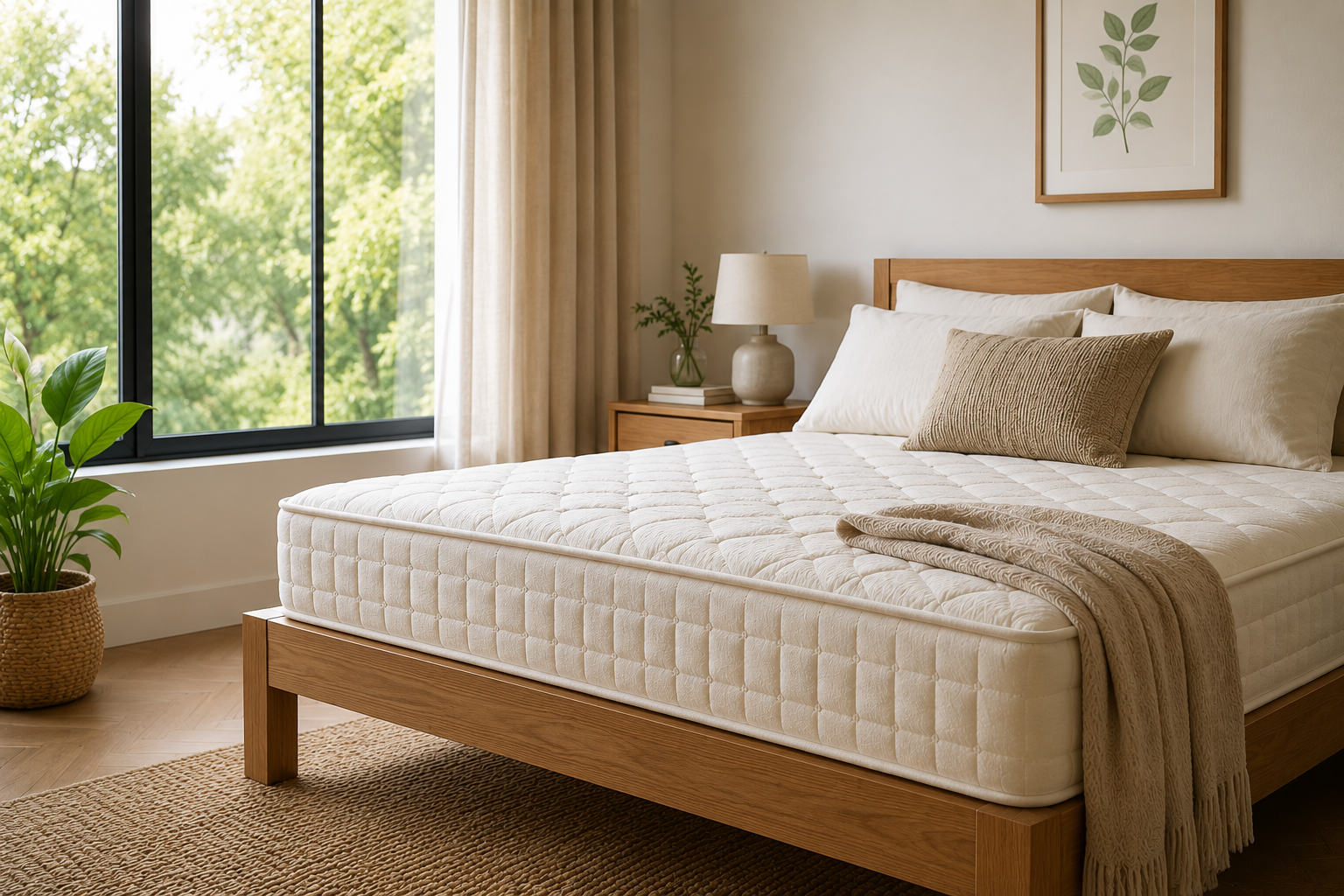
A mattress is one of the closest things to us for hours every night. We’ve researched the best natural mattresses made with materials such as wool, cotton and natural latex, prioritising fewer synthetic foams and unnecessary chemical treatments — without compromising on comfort, support or value.
Our Top Picks
Millbrook Wool Luxury 4000
A remarkably good-value alternative to memory foam, combining breathable wool and natural fillings with pocket springs.
John Lewis British Natural Hemp 2750
Good value, natural materials and build quality, with a foam-free traditional construction handmade by Harrison Spinks.
Woolroom Standen Wool
A luxurious natural-fibre mattress with excellent independent testing behind it
On this page
- Quick answer
- Why mattress materials are worth thinking about
- What is actually inside your mattress?
- Memory foam and VOCs
- Why could VOCs be a concern?
- Chemical flame retardants
- Why are chemical flame retardants a concern?
- Glues and adhesives
- What about natural materials?
- What we look for in a natural mattress
- Recommendations
Quick answer
If you want a mattress with fewer synthetic materials, look beyond the usual memory-foam options. We favour mattresses built around wool, cotton, hemp, natural latex and pocket springs, with clear information about what each layer contains.
Our picks also minimise polyurethane foam, unnecessary adhesives and conventional added flame-retardant treatments where possible. But materials aren't everything: we considered independent testing, comfort, durability and real customer feedback too.
Why mattress materials are worth thinking about
Some materials in mattresses can release volatile organic compounds (VOCs), particularly when a mattress is new.
UK fire-safety requirements add another consideration. Mattresses must meet strict flammability standards, and some manufacturers use chemical treatments to help achieve them. Others use naturally fire-resistant materials and different construction methods to reduce the need for these treatments.
What is actually inside your mattress?
A mattress can contain far more than springs and fabric. Modern designs may combine polyurethane or memory foam, polyester fibres, adhesives and chemical treatments, while more traditional mattresses tend to rely on materials such as wool, cotton, natural latex and pocket springs.
Not every synthetic material is harmful, and “natural” doesn't automatically mean safer. What matters is understanding what you're sleeping on and choosing simpler, more transparent materials where good alternatives exist.
Memory foam and VOCs
Why could VOCs be a concern?
VOCs (volatile organic compounds) are chemicals that can evaporate into the air from materials and products in our homes. Some can irritate the eyes, nose and throat, cause headaches or affect breathing, while long-term exposure to certain VOCs has been linked to more serious health effects.
Memory foam and many other mattress foams are made from polyurethane. Research has shown that polyurethane mattresses can release VOCs, particularly when new and when warmed by body heat.
That familiar “new mattress smell” can be a sign of this off-gassing. Studies suggest emissions generally decline after unpacking, and detecting VOCs doesn't necessarily mean concentrations are harmful. That's why we favour lower-emission, more transparent materials where good alternatives exist, rather than claiming that all foam mattresses are dangerous.
Chemical flame retardants
Why are chemical flame retardants a concern?
Chemical flame retardants have historically been used in some UK mattresses and furniture to help meet strict fire-safety standards. The concern is that some of these chemicals can escape from products and accumulate in household dust, creating ongoing exposure. Certain flame retardants have been linked to concerns around hormone disruption, development and reproduction, as well as environmental persistence.
This is now influencing UK policy. In 2025, fire-safety rules were changed for certain baby and children’s products specifically to reduce exposure to chemical flame retardants.
In 2026, the Government proposed wider reforms aimed at maintaining fire safety while meaningfully reducing the use of chemical flame retardants in upholstered furniture.
The good news is that chemical treatments aren't the only solution. Some manufacturers use wool-rich fabrics and carefully designed natural barriers to meet fire standards with less reliance on added flame-retardant chemicals.
Glues and adhesives
Layered mattresses can also use adhesives to hold foam, fabrics and spring units together. Some adhesives can contribute to VOC emissions, although formulations vary considerably.
That's why we particularly like manufacturers that clearly disclose their construction — and give extra credit to glue-free spring systems where they're available.
What about natural materials?
Wool, cotton, hemp and natural latex can reduce reliance on polyurethane foam and synthetic fillings. Wool is particularly useful in mattresses because it's breathable, moisture-regulating and naturally resistant to ignition.
Natural latex, made from rubber-tree sap, can provide the cushioning people like about foam while avoiding polyurethane memory foam.
But we don't give a mattress a free pass simply because it says “natural” on the label. We still look at the complete construction, certifications where relevant, independent testing, durability and real-world customer experience.
What we look for in a natural mattress
When choosing our recommendations, we looked beyond the marketing and focused on the things that really matter — materials, transparency, comfort, durability and value.
Here’s what we looked for:
- Natural materials such as wool, cotton, hemp and natural latex
- Less polyurethane and memory foam
- No conventional added chemical flame retardants where clearly confirmed
- Minimal or no glue where possible
- Good material transparency — we want to know what’s actually inside
- Independent testing and reputable reviews, where available
- Comfort, durability and quality
Our Recommendations
Best Budget (£)
Millbrook Wool Luxury 4000
A breathable wool-rich pocket-sprung mattress that offers an impressive natural-material construction for the price. A particularly good choice for hot sleepers who prefer a traditional, supportive feel.
- Foam-free
- Natural fibres
- Breathable
- Excellent Value
- Heavy
- Needs turning
John Lewis British Natural Hemp 2750
Handmade by Harrison Spinks using natural fillings including hemp and wool, with a foam- and glue-free spring construction. Our sweet spot for materials, quality and price.
- Foam and glue free
- Breathable
- Natural fillings
- Great value
- Heavy
- Natural fillings can settle
- Possibly limited availability
Best Mid-range (££)
Button & Sprung Galway
A natural pocket-sprung mattress with thousands of responsive springs for targeted support, without relying on synthetic foam comfort layers. A strong choice for sleepers who prefer a supportive, traditional mattress.
- Excellent spring support
- Foam and glue free
- Natural fillings
- Smaller brand
Cottonsafe Natural Mattress
A traditionally made mattress built around breathable natural fibres rather than synthetic foam comfort layers. Particularly suited to shoppers who prioritise simple materials and traditional mattress construction.
- Natural-fibre rich
- Foam-free
- Breathable
- Handmade in the UK
- Natural fillings may settle
Harrison Spinks Grassington 5750
A beautifully made Yorkshire mattress combining thousands of responsive pocket springs with wool and other natural fillings. Strong independent testing makes this one of our most confidently recommended traditional mattresses.
- Natural fillings
- Natural fillings
- Excellent support
- Heavy
- Pricier than our value picks
Best Premium (£££)
Naturalmat The Superb
A more cushioned option combining responsive natural latex with organic wool, cotton and pocket springs. Ideal for sleepers who want a softer, more responsive feel without polyurethane memory foam.
- Natural latex
- Organic wool and cotton
- Breathable
- Choice of firmness
- Expensive
- Latex feel won't suit everyone
Woolroom Standen
A luxurious wool-rich mattress combining traceable British wool with cotton, silk and cashmere over pocket springs. Excellent independent testing and superb temperature regulation make this our premium pick.
- Excellent natural materials
- Highly breathable
- 15-year guarantee
- Expensive
- Very heavy
Vispring Renaissance
A handcrafted British mattress packed with wool, cotton and other natural fibres over Vispring's pocket springs. Beautifully made for sleepers looking for traditional luxury with minimal synthetic materials.
- Natural fillings.
- Foam and glue free
- Excellent craftmanship
- Highly breathable
- Expensive
- Heavy traditional feel wont suit everyone
Hypnos Legacy Origins III
A premium pocket-sprung mattress combining British wool, cotton, kapok and plant fibres with sophisticated spring support. A strong choice for those wanting natural comfort layers with a more substantial, supportive feel.
- Excellent natural materials
- Strong spring support
- Multiple firmness options
- High quality
- Heavy
- Expensive
- Natural fillings can settle
Ad — Contains affiliate links. We may earn a commission if you buy through our links, at no extra cost to you. As an Amazon Associate I earn from qualifying purchases.